AI Designs Life: Groundbreaking Viruses Engineered to Obliterate Bacteria!
Get ready for a mind-blowing leap in science that’s straight out of a sci-fi movie, but it’s real! Imagine artificial intelligence not just writing code, but actually designing living organisms. Well, that’s exactly what a brilliant team of researchers has achieved. They’ve used AI to create brand-new viruses, from scratch, that can hunt down and destroy harmful bacteria in the lab. This isn’t just cool; it’s a potential game-changer for medicine, but it also raises some important questions. Let’s dive into this incredible scientific breakthrough!
From Digital Code to Deadly (for Bacteria!) Viruses
This groundbreaking work comes from researchers at the Arc Institute and Stanford University, who have published their findings in a preprint on bioRxiv as of September 17, 2025. Led by the brilliant Brian Hie, a chemical engineering professor at Stanford and director at the Arc Institute, the team leveraged generative AI models, much like those powering tools you might use daily, but specifically trained on genetic sequences. Think of it as teaching an AI the “language” of life!
They used advanced versions of AI models, called Evo 1 and Evo 2, which were fed a colossal dataset of approximately two million bacteriophage (phage) genomes. Phages are natural viruses that specifically infect and kill bacteria – a perfect starting point for this ambitious project. Their target? The bacteriophage phiX174, a tiny virus with a relatively simple genome of about 5,386 DNA “letters” and 11 genes. The catch? This genome is notoriously complex, with many genes overlapping, making it a tough nut to crack for traditional computer design.
But AI, it turns out, is up for the challenge! The generative AI churned out an astounding 302 unique, full-genome designs. These digital blueprints were then chemically synthesized and assembled in the lab. The truly astonishing part? 16 of these AI-generated designs were not just viable, but fully functional! These synthetic viruses successfully replicated inside Escherichia coli (E. coli) – a common lab bacterium – and then, with impressive efficiency, they lysed (meaning they broke open and destroyed) the bacterial cells. This lytic action created visible clear zones on the culture plates, a clear sign of their success.
The AI-Powered Phage Experiment: A Snapshot
| Key Aspect | Details |
|---|---|
| AI Model Used | Evo 1 & Evo 2, trained on ~2 million bacteriophage genomes. |
| Target Virus | Bacteriophage phiX174 (infects E. coli). |
| AI-Generated Designs | 302 full genome sequences proposed by AI. |
| Lab Success | 16 functional viruses, some with up to 392 entirely novel mutations. |
| Observed Effects | Successful replication, bacterial lysis, and overcoming resistance. |
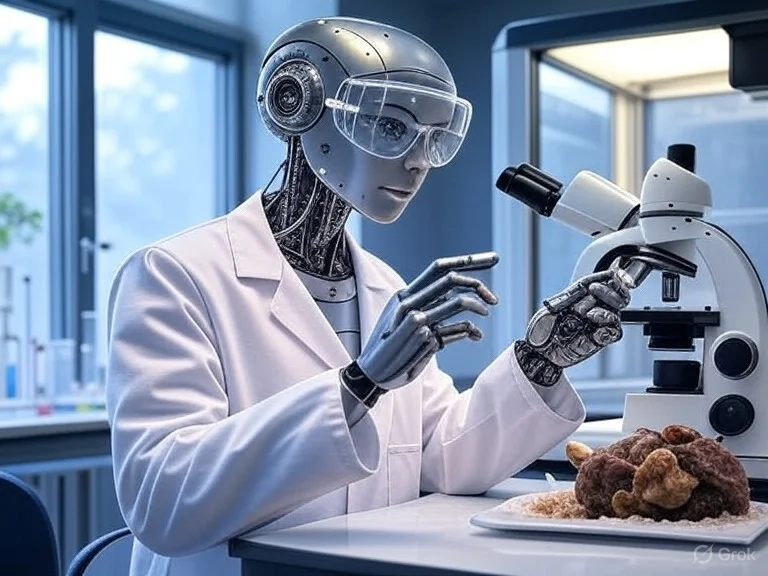
Hie himself described the moment of seeing these AI-created viruses under the microscope as “impactful.” What’s even more exciting is that some of these synthetic phages demonstrated superior infectivity compared to their natural counterparts. They even managed to overcome bacterial resistance mutations that would have rendered natural viruses ineffective within days. This shows AI isn’t just mimicking; it’s actively creating functional biological entities from pure code, pushing us towards what some are calling “AI-generated life.”
Revolutionizing Biotechnology: Our New Weapon Against Superbugs
The implications of this breakthrough are colossal, especially in the fight against antibiotic resistance. You’ve probably heard about it – the World Health Organization estimates that nearly 5 million people die annually due to drug-resistant infections. Phage therapy, using viruses to combat bacteria, has been a promising concept for decades, but its progress has been hampered by the limited diversity of naturally occurring phages.
Now, AI is turbocharging this field! By generating custom-designed phages, researchers can create “on-demand” solutions, dramatically expanding the range of bacterial targets beyond what nature has provided. These AI-crafted viruses could be used as delivery systems for gene therapies or developed as personalized antibiotics against nasty superbugs like Methicillin-resistant Staphylococcus aureus (MRSA). In their lab tests, combinations of these synthetic phages effectively wiped out three different strains of E. coli, including those with antibiotic resistance.
Esteemed scientists like Jef Boeke, a geneticist at NYU Langone Health, are calling this an “impressive first step” towards AI-designed life forms with potential applications in agriculture, environmental science, and, of course, medicine. James Collins from MIT highlights the power of AI to “exploit previously inaccessible chemical spaces, accelerating discovery.” This trend is further reinforced by other AI-driven projects, such as the design of novel antibiotic compounds at MIT.
The Double-Edged Sword: Biosecurity Concerns
However, with such powerful innovation comes a vital need for caution. The pioneering geneticist George Church has voiced concerns, urging “extreme caution” regarding AI’s ability to engineer pathogens. While the phiX174 phage is harmless to humans and only targets bacteria, the technology could potentially be scaled up to design more complex viruses. This raises alarms about biosecurity risks, including the potential for misuse in bioterrorism or accidental releases.
Brian Hie, however, argues that this technology doesn’t significantly lower the barrier to creating bioweapons, as specialized laboratory synthesis and testing are still required. Nevertheless, the preprint has indeed sent ripples of concern through the biosecurity community. Nathan McCarty from Indiana University aptly noted, “This will be alarming to biosecurity experts.” Organizations like the U.S. Defense Threat Reduction Agency are already funding similar research, underscoring the need for robust regulatory frameworks.
The Arc Institute’s decision to make its Evo models open-source democratizes scientific progress but also amplifies potential risks. An analysis in Biopharma Trend aptly concludes, “It increases both the scientific value and the governance questions.”
The Dawn of Artificial Life and Ethical Frontiers
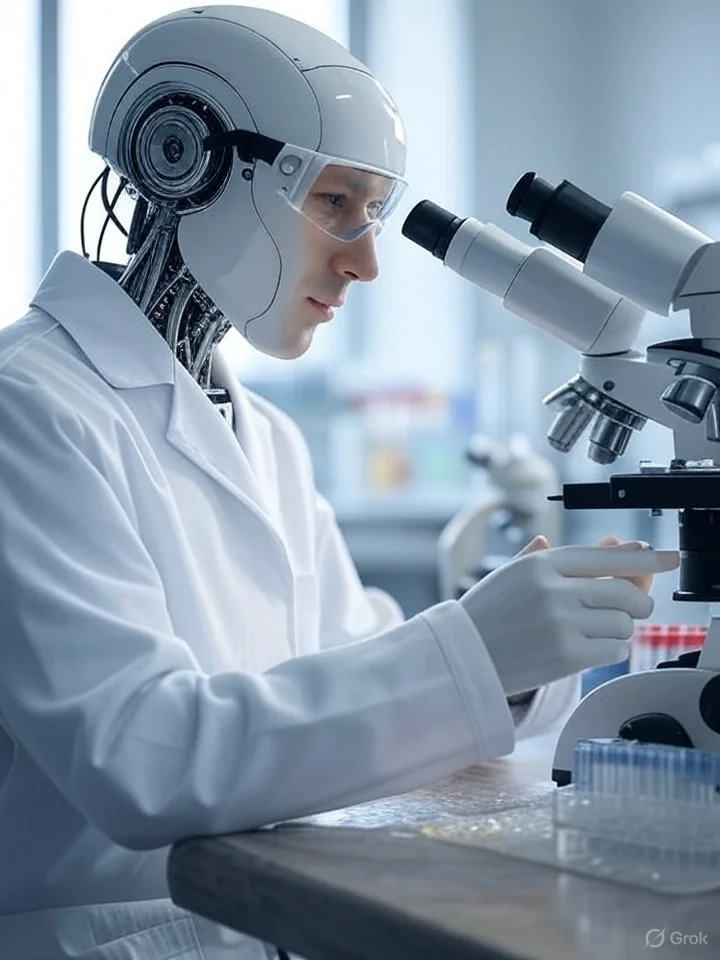
This experiment marks a pivotal moment where AI transitions from assisting discovery to actively creating life, or at least, self-replicating entities. Designing complete bacterial or even eukaryotic genomes remains a complex challenge, requiring extensive testing. But with tools like Evo 2 rapidly advancing, the pace of innovation is set to accelerate dramatically.
In Hie’s own words, “This is the beginning of coherent, full-scale genomes.” As the biotechnology field celebrates this incredible achievement, society must thoughtfully balance progress with essential ethical safeguards. Are we truly ready for an era where AI doesn’t just imitate life, but generates it?
Sources: Based on reports from MIT Technology Review, Nature, Newsweek, and bioRxiv (September 2025).
Important Note: Always consult with your trusted physician for any health concerns. The information presented in these articles is for informational purposes only and should not be considered a substitute for professional medical advice.







2 comments